


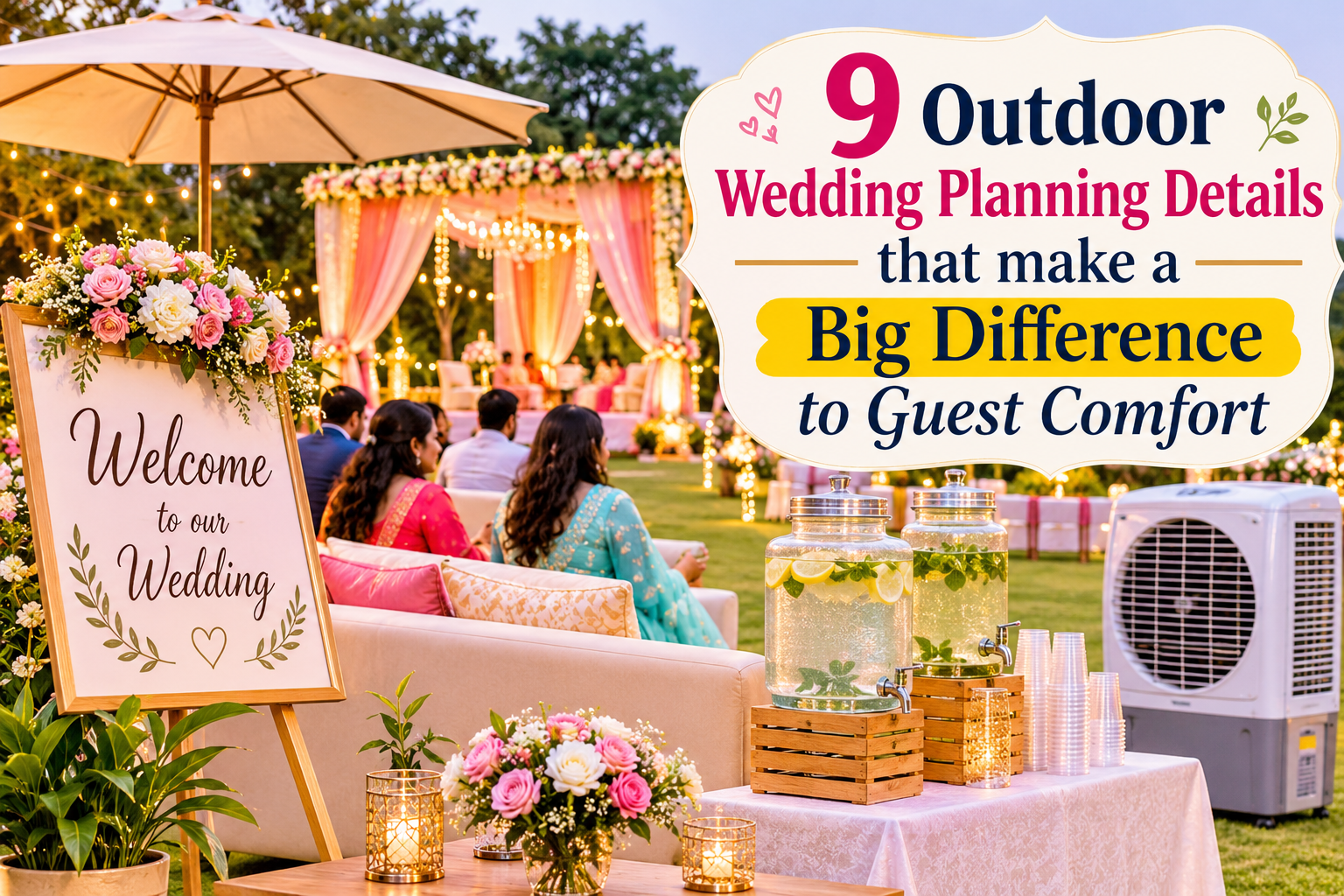
An outdoor wedding offers plenty to fall in love with beautiful surroundings, fresh air and the chance to celebrate somewhere that feels personal. Whether you choose a family garden, a countryside setting or the grounds of a wedding venue, the location can become a memorable part of the day.
Once you have chosen the setting, it is easy to focus on flowers, table decorations and photographs. But your guests will experience the celebration through smaller, practical details too. Somewhere comfortable to sit, a clearly lit path and shelter when the weather changes can make a real difference.
These nine planning details will help you create an outdoor wedding where guests can relax and enjoy themselves from arrival to the final dance.
Top 9 Outdoor Wedding Planning Details
Have a Weather Plan That Accommodates Everyone
When picturing an outdoor wedding, most couples imagine pleasant temperatures and clear skies. Your plans should also work if the weather takes a different turn.
Consider where everyone will go during rain, strong sunshine or a cooler evening. A small, covered area may suit a few guests taking a break, but your main weather plan needs enough space for the whole party.
A marquee can provide a central setting for dining and evening celebrations while keeping guests close to the outdoor surroundings. For UK couples celebrating in Surrey and the surrounding area, Apple Marquee Hire offers site visits and layout planning to help establish how a marquee could work within the available space.
Discuss flooring, ventilation, entrances and any heating requirements early, so your arrangements support the reception whatever the forecast brings.
Make Paths and Flooring Easy to Navigate
A lawn may look smooth in photographs but feel quite different underfoot. Soft ground, gravel and uneven paths can be awkward for guests wearing heels or anyone who finds walking difficult. Walk the routes between the arrival point, ceremony area, reception, toilets and transport collection point. Look for changes in level, narrow passages and areas that could become slippery or muddy.
Ask your venue and suppliers about suitable flooring and accessible routes. If guests have specific access requirements, speak to them beforehand rather than assuming what they will need. It also helps to mention the outdoor setting in your wedding information. A short note about grass or gravel gives guests the chance to choose suitable footwear.
Allow Enough Space Around the Tables
A seating plan needs to account for more than the number of chairs you can fit into the reception area. Guests should be able to pull out their chairs and leave the table comfortably. Serving staff also need clear routes, particularly when carrying hot food or clearing plates.
Discuss the complete layout with your caterer and marquee or venue supplier before finalising table numbers. Include the bar, dance floor, entrances and any furniture that will remain in place throughout the evening. If you are inviting additional evening guests, consider how their arrival will affect the space. Decide beforehand whether any tables need to move and who will manage that change.
Provide Seating Beyond the Wedding Breakfast
Outdoor weddings often involve several periods of standing, from welcome drinks to photographs and evening conversations. A few seats dotted around the reception can make these moments much more comfortable. Create a seating area where guests can rest without feeling removed from the celebration. Position some chairs in shade during the afternoon and make sure there is somewhere sheltered later.
Include supportive chairs with backs alongside any benches or decorative seating. Low cushions and hay bales may suit the look of a wedding, but they will not be comfortable or accessible for everyone. A quieter seating area away from the speakers can also give guests somewhere to talk and take a break.
Plan Lighting for the Whole Site
Decorative lighting creates atmosphere, but guests also need to see where they are going once daylight fades. Pay attention to paths, steps, entrances, toilets and the route towards parking or transport. These areas can be easy to overlook when viewing a venue during the day.
Arrange a conversation with your suppliers about practical lighting as well as table and dance floor lighting. Outdoor equipment and its installation should be suitable for the setting. If possible, visit the site around dusk. You may notice dark corners or unclear routes that were not apparent earlier.
Prepare for Changes in Temperature
An afternoon that feels pleasantly warm can become chilly after sunset. Think about how guests will remain comfortable throughout the celebration. In warmer conditions, provide shaded places to sit and make drinking water easy to find. During cooler weather, discuss appropriate heating arrangements with your venue or marquee supplier.
Let guests know if significant parts of the day will take place outside, including the evening. That gives them time to bring a jacket or another layer. Blankets can be a thoughtful addition, but the wider plan should provide a comfortable environment without relying on guests to improvise.
Give Toilets the Attention They Deserve
Convenient, well-maintained toilets are an essential part of the guest experience.Check that the facilities are appropriate for your guest numbers, reception length and accessibility requirements. For weddings at home or on otherwise undeveloped land, discuss suitable hired facilities early.
Their position matters too. Guests should be able to reach them easily using a clear, lit route, without walking through catering or delivery areas. Confirm who will check supplies and cleanliness during the event. Soap, handwashing facilities and adequate lighting deserve as much attention as the facilities themselves.
Make Food and Drinks Easy to Access
The timing and location of refreshments can affect how comfortable guests feel, particularly during a long outdoor reception.Provide drinking water from arrival and keep it available throughout the day. Make sure guests know where to find non-alcoholic options without having to ask.
Talk to your caterer about dietary requirements, service timings and how food will be prepared and served in the outdoor setting. Their working area needs suitable access and facilities without obstructing guest routes.
If photographs or speeches create a long gap before the main meal, consider whether some refreshments would help. A clear schedule allows your suppliers to keep everything moving smoothly.
Make Arriving and Leaving Straightforward
Guest comfort starts before the ceremony and continues until everyone is on their way home.
Share clear directions, parking information and the correct entrance in advance. For rural locations, check whether the postcode takes drivers to the right place and add useful instructions if needed. Explain any transport arrangements and provide the expected finish time so guests can organise their journey. If taxis need to be booked ahead, include that information too.
At the venue, make the collection point easy to identify and consider somewhere sheltered for guests waiting for transport. A well-planned departure is a thoughtful final detail after a full day of celebrating. An enjoyable outdoor wedding comes from considering how people will use the space throughout the day. When shelter, seating, facilities and movement have been thought through, guests can settle in, spend time together and enjoy the occasion you have created.